
 By cdally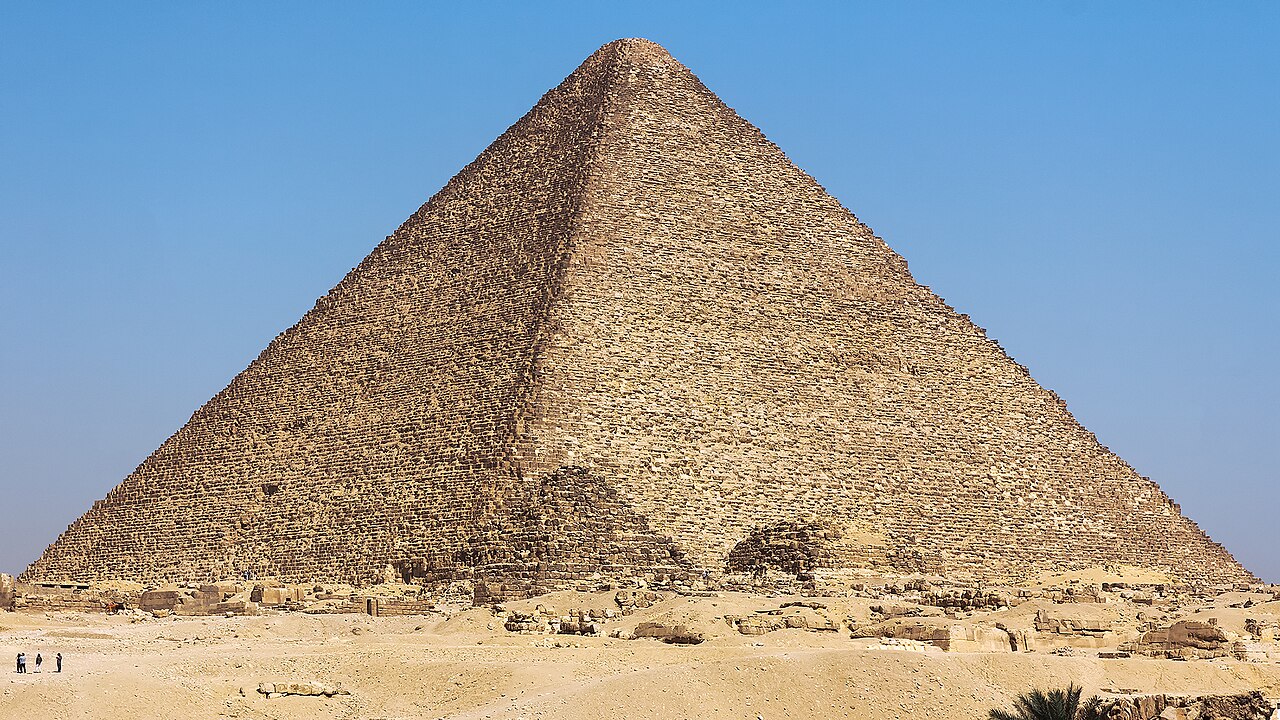
In the golden sands of the Giza Plateau, just outside Cairo, stands the only survivor of the original Seven Wonders of the Ancient World. For over 3,800 years, the Great Pyramid of Giza was the tallest man-made structure on Earth—a feat of engineering so precise that it continues to baffle modern architects and archaeologists alike.
A Monument for Eternity
Built during the Fourth Dynasty of the Old Kingdom of Ancient Egypt, the Great Pyramid was commissioned as a tomb for the Pharaoh Khufu (known to the Greeks as Cheops). Completed around 2560 BC, it was intended to serve as a “resurrection machine,” a place where the king’s soul could ascend to the heavens and join the gods.
Engineering on a Colossal Scale
The statistics of the Great Pyramid are staggering. It consists of an estimated 2.3 million stone blocks, some weighing as much as 80 tonnes. These blocks were transported from quarries across the Nile and positioned with such accuracy that the pyramid is aligned almost perfectly to true north.
A common misconception is that the pyramid was built by slaves. However, archaeological excavations in the late 20th century uncovered the remains of a “worker’s village” nearby. Evidence suggests that the labour force included thousands of skilled conscripted workers and craftsmen who received good food, housing, and even medical care. Building the pyramid was a national project that helped unite the people of Egypt.
The Gleaming White Facade
When we see the Great Pyramid today, we see its weathered, brownish core. However, in its prime, it would have looked entirely different. It was originally covered in “casing stones”—highly polished white Tura limestone. These stones were cut so precisely that the pyramid would have gleamed brilliantly under the desert sun, appearing like a solid, white jewel from miles away.
Most of these casing stones were stripped away in the 14th century to build mosques and fortresses in Cairo, though a few can still be seen at the base today.
The Secret Chambers
Unlike many other pyramids that have simple burial chambers underground, the Great Pyramid contains a complex system of internal passages. Within the structure are the Queen’s Chamber, the Grand Gallery, and the King’s Chamber.
The King’s Chamber houses a red granite sarcophagus, which is slightly larger than the entrance to the room, meaning it must have been placed there during construction. To this day, despite the use of modern muon scanning technology, researchers believe there may still be hidden voids and undiscovered corridors within the massive stone structure.
The Mystery of the Capstone
At the very peak of the pyramid once sat the pyramidion, or capstone. It is believed the structure was covered in gold or electrum (a gold-silver alloy) to catch the first rays of the morning sun. Sadly, this crowning piece has been lost to time, leaving the top of the pyramid flat and roughly ten metres shorter than its original height.
A Global Legacy
Today, the Great Pyramid remains a symbol of human ambition and ingenuity. As a UNESCO World Heritage site, it continues to draw millions of travellers who come to stand in the shadow of the pharaohs and wonder at the secrets still locked inside the stone.