
 By cdally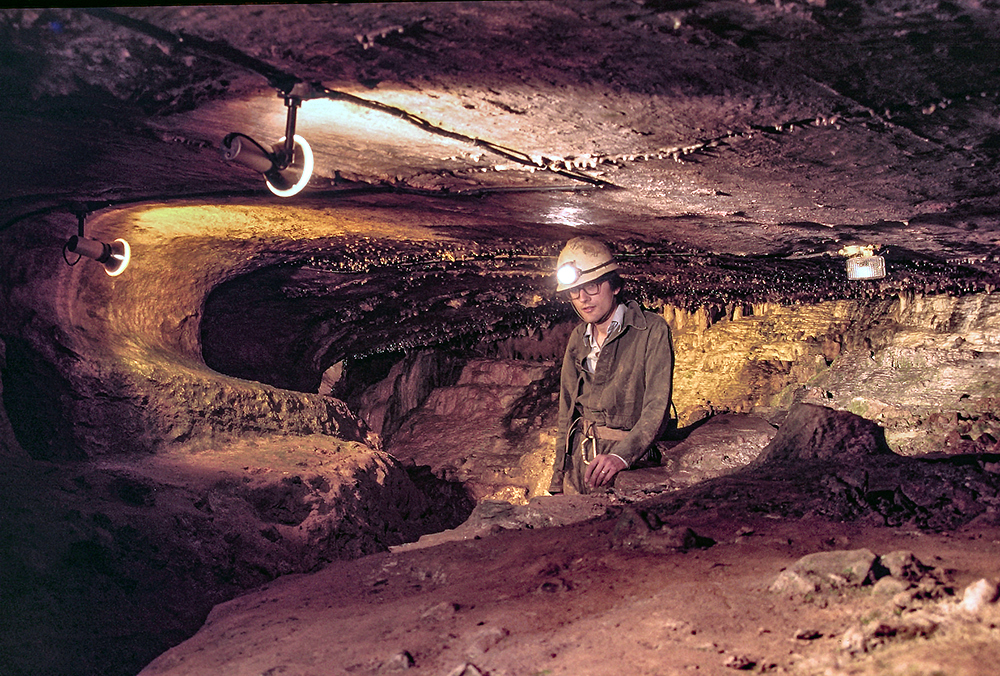
Tucked away in the lush greenery of the Yealm Valley, near the village of Yealmpton, lies a subterranean world that once drew crowds from across the Westcountry. Kitley Show Cave, though now closed to the general public, remains a site of immense historical and archaeological significance.
Today, we take a journey beneath the surface of the Kitley Estate to explore the fascinating story of this limestone wonder.
A Discovery in the Stone
The story of Kitley Cave began not with an explorer, but with industry. In 1834, workers quarrying for limestone on the Kitley Estate—owned by the Bastard family—stumbled upon a series of fissures and caverns.
The discovery at Yealmpton was particularly exciting, even though Devon is renowned for its limestone formations, especially at Kent’s Cavern in Torquay. It wasn’t just the stalactites and stalagmites that caught the eye; it was what lay buried in the silt and clay on the cave floor.
An Ice Age Menagerie
Shortly after its discovery, Kitley Cave became a focal point for Victorian gentleman-scientists. The most notable figure to take an interest was William Pengelly, the legendary geologist and archaeologist who pioneered modern excavation techniques.
What Pengelly and his contemporaries found was nothing short of a prehistoric graveyard. Deep within the limestone chambers lay the fossilised remains of animals that would seem entirely out of place in the modern Devon countryside. Excavations revealed the bones of:
- Woolly Rhinoceroses
- Cave Hyenas
- Bison
- Reindeer
- Mammoths
These remains date back to the Middle Palaeolithic period, proving that tens of thousands of years ago, the Yealm Valley was a roaming ground for Ice Age megafauna. Furthermore, evidence of human presence, including flint tools, suggested that early humans used these caves for shelter or ritual.
The Golden Age of the Show Cave
For much of the 20th century, Kitley Cave was a popular tourist attraction. It was marketed as a “show cave,” allowing families to wander through the damp, atmospheric passages and marvel at the geological formations.
Visitors would be led through the “Great Hall” and along narrow pathways, with guides recounting the stories of the ancient beasts that once slept where they stood. It provided a rare glimpse into the “Deep Time” of the British Isles, making archaeology accessible to the everyday holidaymaker.
The Closing of the Gates
By the late 1990s, however, the era of Kitley as a public attraction began to wind down. In 1999, the cave was officially closed to the public.
The closure was primarily driven by two factors. Firstly, there were growing concerns regarding radon gas—a naturally occurring radioactive gas often found in limestone caves. Whilst harmless in small doses, the levels within the confined spaces of Kitley were deemed a health and safety risk for staff spending long hours underground. Secondly, the costs of maintaining the walkways and lighting to modern safety standards became prohibitive for a private estate.
Kitley Cave Today
Although you can no longer buy a ticket to explore its depths, Kitley Cave is far from forgotten. It is now a Site of Special Scientific Interest (SSSI) and serves as a vital sanctuary for wildlife.
In particular, the cave is a crucial roosting site for the Greater Horseshoe Bat, one of the UK’s rarest bat species. Without the disturbance of human footfall and artificial lighting, the colony has been able to thrive in the dark, constant temperature of the Yealmpton limestone.
A Lasting Legacy
Kitley Show Cave remains a poignant reminder of Devon’s ancient past. From Ice Age predators to Victorian explorers and 20th-century tourists, the cave has witnessed the changing face of Britain over millennia.
While the “Show Cave” signs may have faded, the secrets held within the rock at Yealmpton continue to be a vital part of our natural heritage, protected for the creatures that now call it home and the historians who continue to study its silent, stoney halls.