Wedding Cake Wisdom: Choosing, Costing and Cutting the Centrepiece
There is a moment at almost every reception when the chatter dips, phones rise and the couple gather around a knife tied with ribbon. The cake-cutting is one of the most photographed minutes of the day, and the cake itself is often the one item guests remember long after the speeches have blurred. A little forethought turns it from a last-minute worry into a highlight.
A Cake with a Long Past
The wedding cake has changed shape many times. Ancient Roman celebrations are often linked with a simple bread or barley cake broken over the bride, a gesture meant to bring fertility and good fortune. Centuries later, rich fruit cakes became the British favourite, since their spices, dried fruit and spirits helped them keep for months. The tall white iced cake we now think of as classic owes much to royal weddings of the nineteenth century, when pale sugar icing became a fashionable sign of refinement.
Many of today's wedding traditions around the cake grew from that history. Keeping the top tier for a future christening or first anniversary is one example, and it works because fruit cake travels and stores well. Not every couple wants to follow the old script, but knowing where the customs came from makes it easier to decide which to keep.
Choosing the Style
Tiers, shape and size
Start with your guest list, because it determines how much cake you need. As a broad guide, a two-tier cake suits a smaller gathering, while a three-tier cake is a common choice for a medium to large reception. If you want height for the photographs but fewer portions, ask your baker about a display tier made partly of dummy cake, or about a small tiered cake backed up by a sheet cake served from the kitchen.
Finish and decoration
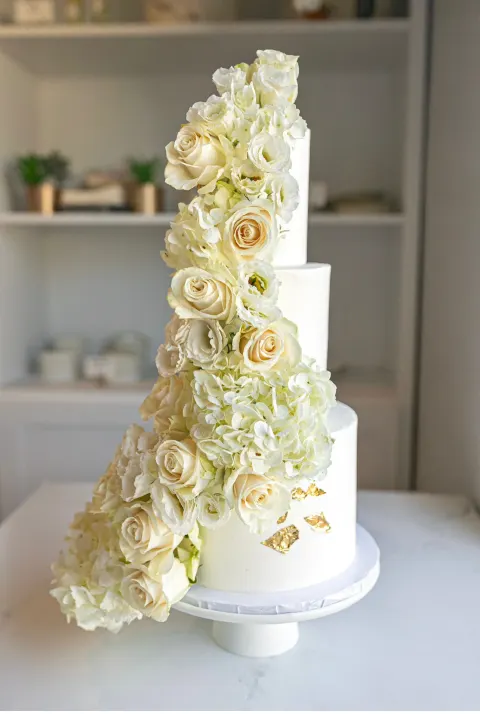
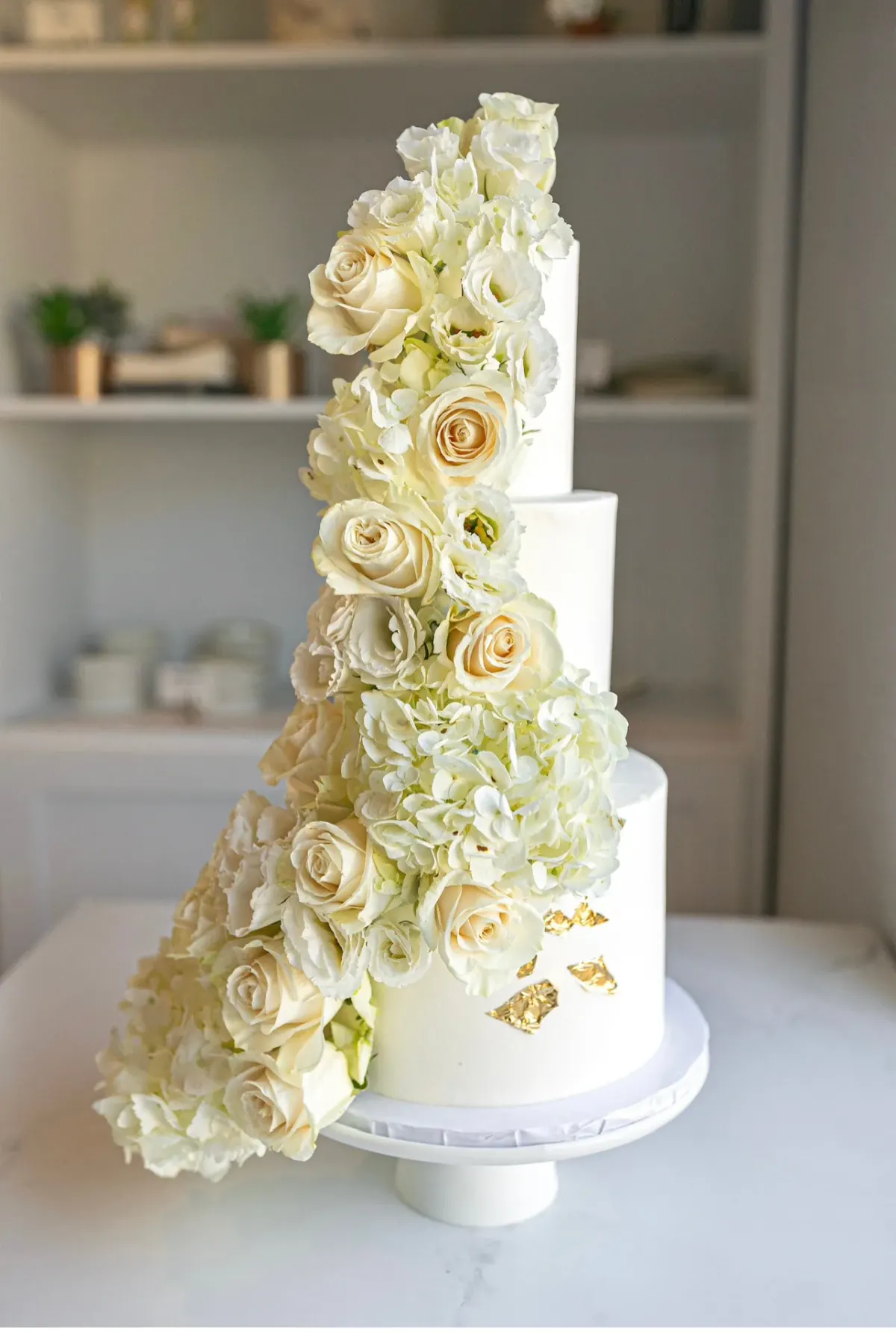
Buttercream, ganache and sugar paste each give a different look. Smooth fondant creates crisp, formal lines, while buttercream suits a softer, more rustic finish with fresh flowers or fruit. Fondant is usually more labour-intensive, which tends to be reflected in the quote. Always ask whether any flowers on the cake are edible or simply decorative, and make sure they are food-safe.
Beyond the traditional
Some couples now swap sponge for stacked wheels of cheese, a tower of doughnuts or a spread of mini desserts. These can work well if you prefer a savoury ending or want something easy to serve, but check how the venue will handle cutting and plating.
Picking the Cake Flavours
Tastings are the best part of this job, so book them early and bring someone with an honest palate. Classic cake flavours such as vanilla, lemon, chocolate and red velvet remain safe crowd-pleasers. Carrot, coffee, salted caramel and fruit-led combinations have also become popular. Different tiers can carry different flavours, which lets you please both traditionalists and the adventurous without compromise.
Consider the season and the time of day as well. Light citrus and berries suit a summer afternoon, whereas spiced or chocolate-based sponges feel natural on a winter evening. If any guests have allergies or follow gluten-free, dairy-free or vegan diets, tell your baker well in advance and ask how they handle cross-contamination. Many professionals offer a separate small cake for such guests.
Understanding Wedding Cake Cost
The wedding cake cost varies widely, and published averages for the UK differ depending on who is counting. Many guides put a typical cake somewhere in the low hundreds of pounds up to around £700, with elaborate bespoke designs costing considerably more. Bakers usually price per portion, so the number of guests, the complexity of the decoration and your location all matter.
| Factor | Effect on price |
|---|---|
| Number of servings | More portions mean more ingredients and labour |
| Fondant and sugar flowers | Usually costs more than simple buttercream |
| Specialist ingredients | Premium flavours can add to the price |
| Location and delivery | Cities and long delivery distances tend to cost more |
| Venue cutting fee | Some venues charge per slice to cut and serve an outside cake |
That last point catches out many couples. Ask your venue about cutting or serving charges before you sign with a baker. To keep costs sensible, choose a smaller showpiece cake and supplement it with sheet cake, opt for simpler decoration, or have fresh flowers do the work that sugar artistry would otherwise do. In the grand scheme of wedding planning, the cake is usually a small slice of the overall budget, so it is worth spending where you will notice it most.
Cutting and Serving with Confidence
Agree the timing with your venue and photographer. Cutting the cake after the meal and before the dancing is common, though some couples prefer to serve it as dessert. Traditionally, the couple make the first cut together, with one hand placed over the other, as a symbol of their first shared task. Pause for a moment so guests can capture it.
Behind the scenes, make sure someone is responsible for slicing and plating the rest. Ask the baker for a simple cutting guide, as tiered cakes are cut differently from round single cakes, and have boxes ready so guests can take a slice home. If you plan to save the top tier, wrap it well and freeze it soon after the party, and remember that a cake kept for a year will not taste as fresh as it did on the day.
The Sweet Takeaway
The best wedding cake is the one that suits your guests, your budget and your style. Book your baker early, taste before you commit, clarify every fee, and let a few traditions guide you without tying your hands. Do that, and the knife-and-ribbon moment will be a happy one.