
 By cdally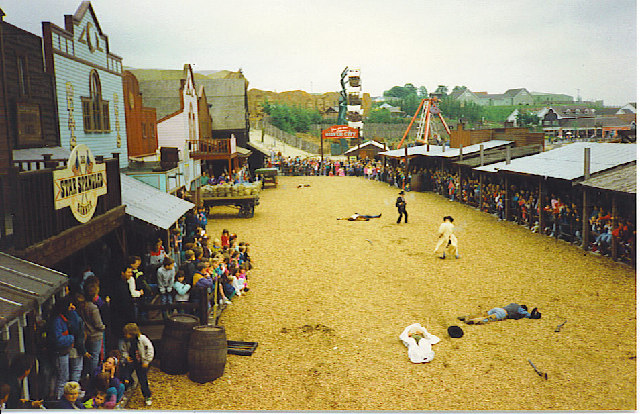
Nestled in the heart of Derbyshire, England, The American Adventure theme park holds a special place in the memories of many who visited its gates in the late 20th and early 21st centuries. Opening its doors in June 1987, the park was a bold and ambitious project designed to bring a slice of the American spirit to the British countryside. Over the years, it became both a beloved destination and a cautionary tale in the world of theme parks. Let’s delve into the fascinating history of The American Adventure—from its grand beginnings to its eventual closure.
A Wild West Dream
The American Adventure was built on the site of the former Britannia Park, which had closed after only a few months due to financial issues. The new park was developed by the Granada Group, which envisioned a theme park based on the legendary American frontier and Wild West.
The park’s original theme captured the imagination of visitors with attractions like the Runaway Mine Train, a family-friendly roller coaster weaving through mock canyon landscapes, and the Rocky Mountain Rapids, which simulated a thrilling river journey. Western shows, shootouts, and cowboy-themed entertainment gave the park an authentic, immersive atmosphere, making it unique among British amusement parks of the era.
Expansion and Diversification
As the years passed, The American Adventure expanded its offerings beyond the Wild West. The addition of the Missile—a looping Vekoma roller coaster relocated from the now-closed Rotunda Amusement Park—signalled the park’s commitment to thrilling, modern rides. New sections were introduced, such as the Space Port USA area, which included futuristic attractions like the Twin Looper roller coaster.
To appeal to a broader audience, the park also added family and children’s areas, including a replica of the famous American paddle steamer and a large indoor play zone called The Alamo. The goal was to create a comprehensive experience that blended Americana with the excitement of a traditional theme park.
Challenges and Decline
Despite its initial popularity, The American Adventure soon faced a series of challenges. Competition intensified as other UK theme parks, such as Alton Towers and Drayton Manor, expanded and modernised their own attractions. Meanwhile, The American Adventure struggled with ageing infrastructure, rising operational expenses, and several changes in ownership.
In the early 2000s, the park shifted its strategy to focus on families with younger children, removing some of its most popular thrill rides, including the Missile and the log flume. While this move aimed to cater to a different demographic, it alienated many long-time fans and failed to attract enough new visitors. Maintenance issues and negative publicity further impacted attendance.
The Final Years and Closure
By the mid-2000s, it had become clear that The American Adventure was struggling to remain viable. The park’s size was gradually reduced, and several areas were left unused or demolished. On January 4, 2007, the park’s operators announced that The American Adventure would not reopen for the coming season. Local authorities and fans mourned the loss of a once-popular attraction.
Legacy and What Remains Today
Following its closure, the site was sold and earmarked for redevelopment. Over the years, many of the park’s structures have been demolished, and the area has been transformed into housing and country parkland. However, the legacy of The American Adventure lives on in the hearts of those who visited—and in the many photos, videos, and stories shared by nostalgic fans online.
Despite its relatively short lifespan, The American Adventure theme park remains an iconic part of British amusement park history. Its ambitious vision, memorable attractions, and unique blend of Americana continue to inspire fond memories and “what if?” discussions among theme park enthusiasts to this day.