Triple Digits and a Towering Frame: Meet Jacob Misiorowski
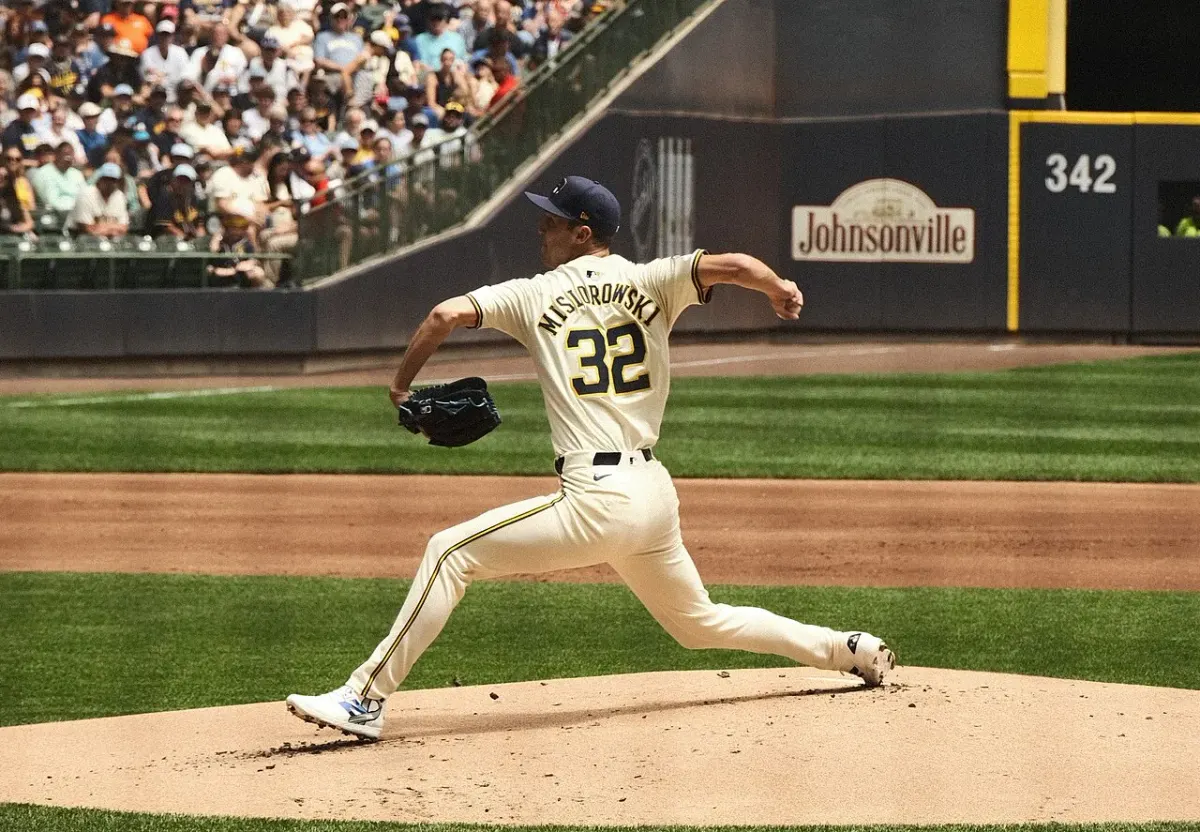
In baseball, a fastball that touches 100 mph, about 161 km/h, is a rare thing. A pitcher who throws it routinely, from a frame that stands around 2 metres tall, tends to make crowds sit up and batters shift uneasily in the box. That is the appeal of Jacob Misiorowski, the Milwaukee Brewers right-hander whose rise from a junior college in the American Midwest to Major League Baseball has been one of the more eye-catching stories of recent seasons.
From Junior College to the Draft
Misiorowski's route to professional baseball was not the typical one for a top prospect. Rather than heading straight to a famous university programme, he pitched at Crowder College, a junior college in Missouri. Junior colleges often serve as a proving ground for players who need time to develop physically or to attract attention from scouts, and that is how things worked out for him.
The Brewers selected him in the second round of the 2022 MLB Draft. For a club that has long prided itself on spotting and developing pitching talent in a smaller market, he looked like a classic high-risk, high-reward choice: extraordinary raw power, but plenty still to refine.
What Makes Him Different
The fastball
The first thing anyone notices is the velocity. His fastball has been clocked well above 100 mph, a level that only a handful of pitchers in the sport reach with any regularity. Hitters have only a fraction of a second to decide whether to swing, so even a small gain in speed shrinks their margin for error dramatically.
The frame and delivery
Misiorowski is listed at roughly six feet seven inches tall (about 2 metres), with long limbs that help him release the ball closer to the batter than most pitchers can. That extra extension can make a fast pitch feel faster still. His delivery is energetic and, to many observers, slightly unorthodox, which adds to the difficulty of picking up the ball.
The supporting pitches
Power alone does not make a starting pitcher. Alongside the fastball, he has worked on breaking pitches, including a hard curveball-style offering, to give hitters something else to think about. The aim is simple: if a batter must worry about a breaking ball, the fastball becomes harder to time.
The Challenge of Control
Every pitcher with this much velocity faces the same question: can he locate it? During his time in the minor leagues, Misiorowski became known for generating a large number of strikeouts, but also for periods when command wavered and walks crept in. This pattern is common among young power arms. A long, athletic delivery has many moving parts, and repeating it pitch after pitch takes time and practice.
Coaches in the Brewers system worked on consistency, with the goal of making his delivery repeatable without sacrificing the speed that makes him special. Managing workload has also been part of the picture, since teams are careful with the arms of young pitchers who throw so hard.
Arriving in the Major Leagues
Misiorowski reached the majors in 2025, after rising quickly through the Brewers' minor-league levels. His arrival generated buzz well beyond Milwaukee, with fans and commentators keen to see whether the radar-gun numbers would translate against the best hitters in the world. His early outings showed both the promise and the learning curve: overpowering moments, balanced by the inevitable adjustments any rookie must make as opponents study him.
He also drew attention on the sport's wider stage during that first season, a sign of how quickly his profile had grown. For a player who was far from a household name only a few years earlier, it marked a remarkable change.
Why the Brewers Value Him
Milwaukee operates with a smaller payroll than baseball's biggest spenders, so developing homegrown talent matters enormously. A young pitcher with elite stuff, who remains under team control for several seasons, is precisely the kind of asset that can anchor a rotation without costing a fortune. If he continues to improve, he could become central to the club's long-term plans.
What to Watch Next
Several things will shape his career from here:
- Command: Throwing strikes consistently, especially early in counts, will determine how deep into games he can pitch.
- Durability: Throwing at this intensity places heavy demands on the arm, so health and workload management will be crucial.
- Pitch mix: Developing reliable secondary pitches will help him stay ahead of hitters who have seen his fastball before.
- Adjustments: As opposing teams gather more information, his ability to adapt will be tested.
Why Misiorowski Matters
Part of baseball's enduring charm is its capacity to surprise. A pitcher from a junior college who reaches the major leagues and throws harder than almost anyone in the game reminds us that talent can emerge from unexpected places. Whether Jacob Misiorowski becomes a long-term star or simply a thrilling chapter in the Brewers' story, his blend of speed, size and potential makes him one of the most compelling young players to follow. For newcomers to the sport, he is a perfect introduction to what makes pitching duels so gripping.