Jam, Almonds and a Crisp Case: How to Bake a Proper Bakewell Tart
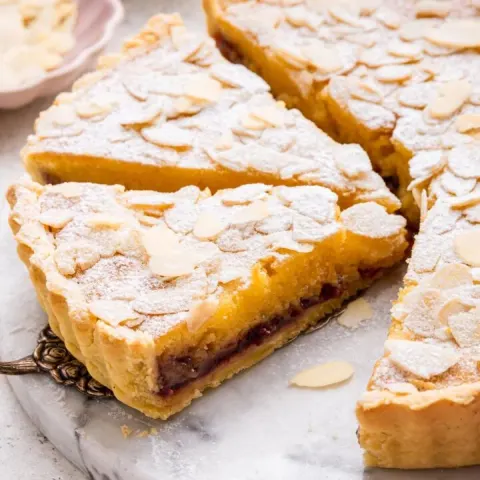
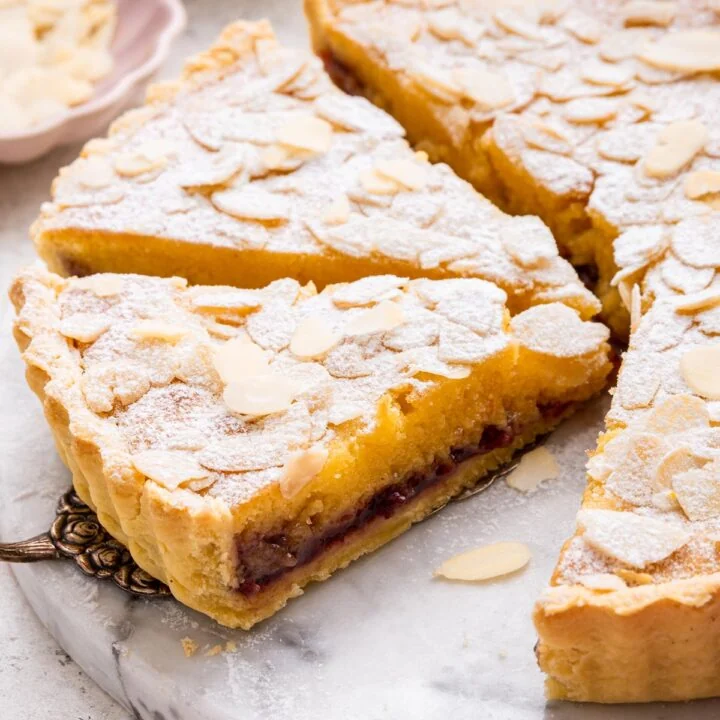
Cut into a good Bakewell tart and you should see three clear layers. There is a pastry case that snaps rather than bends, a thin seam of bright jam, and a golden almond sponge that is moist without being heavy. It looks simple, and the ingredients are humble, but each layer needs a little care. This Bakewell tart recipe walks through the method and explains why each step matters.
Tart or Pudding? A Quick Bit of History
The tart has its roots in the Derbyshire town of Bakewell, where a similar dish known as the Bakewell pudding is still made. The traditional pudding uses a rich pastry, a layer of jam and a set egg-and-almond mixture. The tart we know today is a cousin of it. It has a firmer pastry case and a sponge-like almond filling, and the commercial version is often topped with icing and a cherry. Both are fixtures among British traditional desserts, and both are said to have grown out of a kitchen accident in the nineteenth century, though the story has been told in several versions.
What You Need
This makes one 23cm tart, enough for eight slices.
For the shortcrust pastry
- 200g plain flour, plus extra for dusting
- 100g cold butter, cut into small cubes
- 25g icing sugar
- 1 egg yolk
- 2 to 3 tablespoons cold water
For the filling
- 3 to 4 tablespoons raspberry jam
- 125g softened butter
- 125g caster sugar
- 2 large eggs
- 125g ground almonds
- 25g plain flour
- A few drops of almond extract
- A handful of flaked almonds for the top
Step One: Make the Pastry
Rub the butter into the flour and icing sugar with your fingertips until the mixture looks like fine breadcrumbs. Work quickly, because warm hands make greasy pastry. Add the egg yolk and just enough cold water to bring the dough together, then flatten it into a disc, wrap it and chill it for at least 30 minutes. Resting relaxes the gluten, which stops the case shrinking in the oven.
Roll the dough on a lightly floured surface to about the thickness of a pound coin. Lift it into a loose-bottomed tin, press it gently into the corners and leave a little overhang. Chill again for 15 minutes.
Step Two: Blind Bake for a Crisp Case
Heat the oven to 200°C (180°C fan, gas 6). Line the pastry with baking paper, fill it with baking beans or rice and bake for about 15 minutes. Remove the paper and beans, then return the case to the oven for around 5 minutes, until the base looks dry and pale gold. This step is the best defence against a soggy bottom. Trim the overhang with a sharp knife once the case is baked, as the pastry will have shrunk slightly by then.
Lower the oven to 180°C (160°C fan, gas 4) before you add the filling.
Step Three: Jam and Frangipane
Spread the jam over the base in a thin, even layer. Too much will bubble up and make the pastry damp, so be sparing. Raspberry is the classic choice, but a good-quality cherry or plum jam also works.
To make the frangipane, beat the butter and sugar until pale and creamy. Add the eggs one at a time, beating well after each. If the mixture looks curdled, a spoonful of the ground almonds will bring it back together. Fold in the rest of the ground almonds, the flour and the almond extract. Spoon the mixture over the jam and spread it to the edges, sealing the jam underneath. Scatter the flaked almonds on top.
Step Four: Bake and Cool
Bake for 25 to 30 minutes, until the surface is deep golden and springs back when pressed lightly. If the almonds darken too quickly, cover the tart loosely with foil. Leave it in the tin for 10 minutes, then lift it out and cool on a wire rack. The filling continues to set as it cools, so cutting too early can lead to a crumbly slice.
Common Problems and Simple Fixes
- Pastry shrinks: the dough was stretched when lined or not rested. Chill it twice and ease it into the tin rather than pulling.
- Filling is dry: it was overbaked, or too much flour was used. Measure carefully and check the tart a few minutes early.
- Filling sinks in the middle: the oven may be too cool, or the tart was moved before the centre had set.
- Jam leaks through: the layer was too thick, or the pastry case had cracks. Patch any cracks with a little leftover raw dough before filling.
Finishing and Serving
Many bakers prefer the tart plain, with its toasted almonds on show. For the iced version, stir a little water into 100g of icing sugar until it forms a thick, pourable glaze. Spread it over the cooled tart and add a glacé cherry if you like.
Serve it at room temperature, or warm for a few minutes in a low oven, with custard, cream or a spoonful of crème fraîche. It keeps well in an airtight tin for two to three days.
Why It Is Worth Mastering
A Bakewell tart rewards patience more than skill. Chill the pastry, bake the case properly, and keep the jam thin, and you will have a dessert that sits comfortably at a family tea or a dinner party. It is a good place to practise the basics of British baking, and once you have shortcrust pastry and frangipane in hand, you can use them for many other tarts.