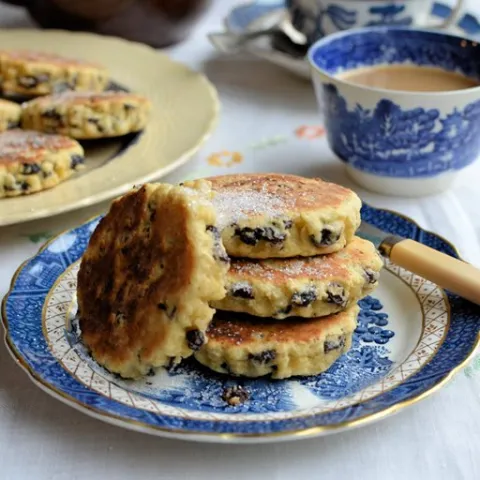
Griddle, Sugar, Spice: Welsh Cakes That Stay Soft and Tender
A heavy iron plate warms on the hob, a knob of butter melts and hisses, and the smell of sugar and spice drifts through the kitchen. That is the moment a batch of Welsh cakes begins. Part scone, part shortbread and part pancake, these round griddle cakes have been a staple of Welsh baking for generations. They are best eaten warm, when they are soft inside with a lightly crisp, sugary edge. Too often, though, they turn out dry or biscuity. The fix is rarely a different list of ingredients. It comes down to a gentle hand and careful heat.
What Makes a Welsh Cake Different
Unlike a scone, a Welsh cake is never baked in an oven. It is cooked on a bakestone, also called a planc or maen, which is a flat cast-iron plate that was once set over an open fire. Today a heavy frying pan or a flat griddle does the same job. The dough is closer to a rich shortcrust than a bread dough, made from flour, fat, sugar, dried fruit, an egg and a little spice. It is rolled fairly thick, cut into rounds and cooked slowly on both sides.
Like many traditional recipes, there is no single correct version. Some households use only butter, while others swear by a mix of butter and lard. Some add a generous pinch of mixed spice and others only a hint of nutmeg. The method below is a reliable middle path.
A Dependable Welsh Cakes Recipe
Ingredients (makes about 14)
- 225g self-raising flour, plus extra for dusting
- 100g cold butter, diced (or 50g butter and 50g lard)
- 75g caster sugar, plus extra for coating
- 75g currants
- 1 tsp mixed spice
- A pinch of salt
- 1 medium egg, beaten
- 1 to 2 tbsp milk, if needed
- A little butter or neutral oil for the griddle
Method
- Sift the flour, spice and salt into a large bowl. Rub in the cold butter with your fingertips until the mixture looks like fine breadcrumbs.
- Stir in the sugar and currants.
- Add the beaten egg and mix with a round-bladed knife, then your hands, until the dough comes together. If it feels crumbly, add milk a teaspoon at a time. It should be soft but not sticky.
- Roll out on a lightly floured surface to about 6mm thick. Cut into rounds of roughly 6cm and gently re-roll the trimmings once.
- Heat your bakestone or heavy pan over a medium-low heat and grease it very lightly. Cook the cakes for about 3 minutes on each side, until deep golden brown and cooked through.
- Lift them onto a rack and toss in caster sugar while still warm.
The Secrets of a Soft Crumb
Keep everything cool and handle lightly
Cold fat and a short mixing time keep the dough tender. Overworking develops the Gluten in the flour, which makes the cakes tough rather than melting. Bring the dough together, roll it once and stop fussing.
Mind the thickness
Rolling too thin is the most common cause of dry Welsh cakes, because they cook through before they can colour and then toughen as they dry out. Aim for a thickness a little under a centimetre so the middle stays soft.
Control the heat
A scorching pan browns the outside while leaving the centre raw. A pan that is too cool dries the cakes out as they slowly cook. Aim for a steady medium-low heat and test with a single cake first. If it browns in under two minutes, turn the heat down and wipe away any burnt flour before the next batch.
Let them rest wrapped
Once cooked, place the cakes in a clean tea towel for a few minutes. The trapped steam softens the crust slightly and keeps the centres tender.
Troubleshooting Common Problems
| Problem | Likely cause | Solution |
|---|---|---|
| Dry and crumbly dough | Too little moisture | Add milk a teaspoon at a time |
| Raw centres | Heat too high | Lower the heat and cook for longer |
| Hard, biscuity texture | Rolled too thin or overcooked | Roll thicker and watch the timing |
| Sticking to the pan | Pan too cool or under-greased | Preheat properly and add a thin film of fat |
Variations, Storage and Serving
Currants are classic, but sultanas, chopped dried apricots, cranberries or a little grated lemon zest all work well. For a gluten-free version, use a good gluten-free self-raising blend and expect a slightly more delicate dough that needs careful handling.
Welsh cakes are at their finest on the day they are made, served warm with a mug of tea. Some people add a smear of butter, though they need little else. Leftovers will keep in an airtight tin for two to three days, and a few seconds in a warm pan will revive them. They also freeze well. Layer them with baking parchment, then thaw at room temperature and refresh on the griddle.
Why This Humble Bake Still Matters
Welsh cakes are associated with St David's Day on 1 March, yet they are far too good to save for one date. They need no special equipment, just a few pantry staples and a little patience at the hob. Once you have mastered the heat and the rolling, these little griddle cakes become an easy, rewarding bake for every day of the week, and a delicious way to keep an old tradition alive in your own kitchen.