Light on the Land: Ansel Adams and the Art of Seeing Wild America
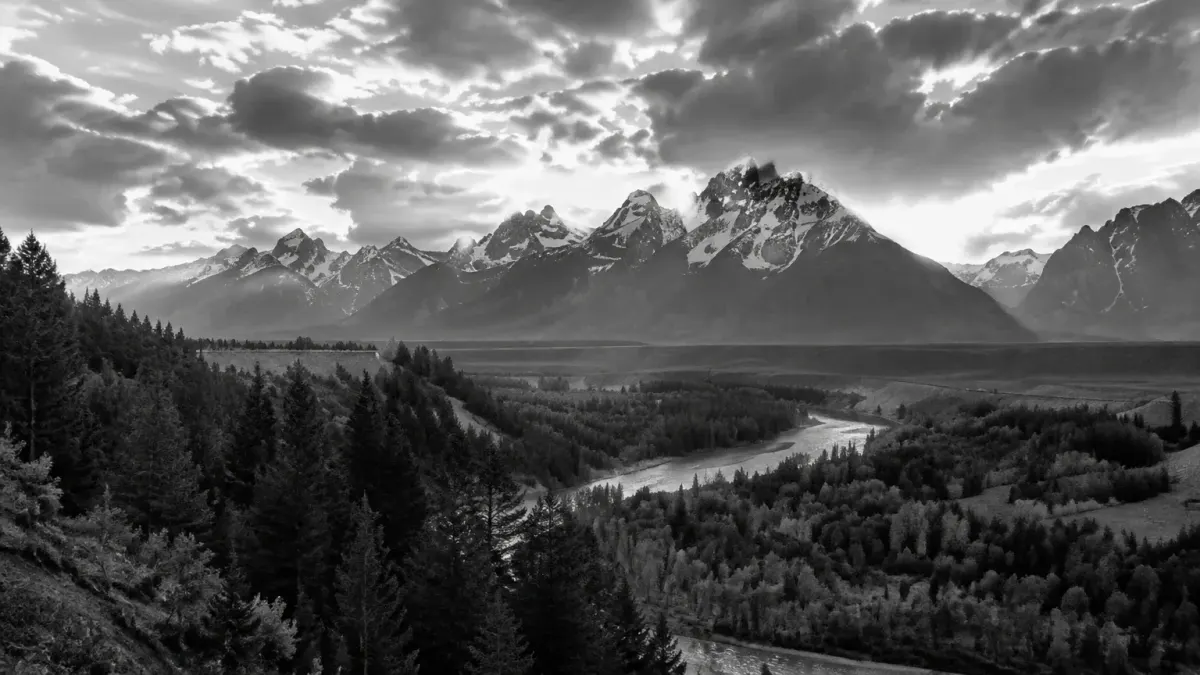
A black-and-white photograph of a granite cliff, a darkened sky and a sliver of snow is, for many people, the first image that comes to mind when they think of the American wilderness. That picture owes much to one man. Ansel Adams (1902-1984) was a photographer, writer, teacher and campaigner whose work helped define how the world sees the landscapes of the American West.
From Piano Keys to Yosemite
Adams was born in San Francisco on 20 February 1902. As a boy he was restless and hard to fit into a classroom, and he was largely educated at home and through private tuition. He was also a serious pianist and, for years, expected music to be his career.
In 1916 his family took him to Yosemite Valley, and the trip changed his direction. He took a simple camera with him and began to photograph the cliffs, waterfalls and forests. He returned often, joined the Sierra Club and spent summers in the Sierra Nevada, hiking, climbing and taking pictures. Over time, the camera replaced the concert platform as his main ambition.
A New Way of Seeing
Early in his career, many art photographers favoured soft-focus, painterly effects. Adams moved the other way. In 1932 he was among the founders of Group f/64, a loose circle of West Coast photographers that also included Edward Weston and Imogen Cunningham. The name referred to a very small lens aperture, which produces sharp detail from the nearest rock to the furthest ridge.
The group argued that photography did not need to imitate painting. Its strength lay in clarity, texture and tone, and in the honest rendering of what stood in front of the lens.
Visualisation
Adams often spoke of visualisation: deciding, before pressing the shutter, how the finished print should look. His 1927 image of Half Dome in Yosemite is a well-known early example. He used a strong red filter to darken the sky and make the rock stand out, choosing a dramatic result rather than a literal record of the scene.
The Zone System
Adams was as much a craftsman as an artist. Around 1940, working with the teacher Fred Archer, he helped formulate the Zone System. It divides the range of tones from pure black to pure white into a series of steps, or zones. A photographer could then judge how to expose the negative and develop it so that each part of the scene landed where it was wanted in the final print.
The system is still taught, and its underlying idea carries over to digital work: think about the whole tonal range before you shoot, not after. Adams also passed on his methods through a technical series of books on the camera, the negative and the print, and through workshops that began in Yosemite in the 1940s.
Famous Images and Quieter Work
Among his best-known photographs is Moonrise, Hernandez, New Mexico, made in 1941 as he drove past a small village beneath a rising moon. He reportedly worked quickly to set up before the light changed. The print became one of the most celebrated photographs of the century, and he returned to it many times in the darkroom.
Adams did not photograph only grand scenery. In 1943 he documented life at Manzanar, a camp in California where Japanese Americans were held during the Second World War. The pictures, published in his book Born Free and Equal, show portraits and daily activity, and they remain an important record of the period.
Photographer and Campaigner
Adams saw his photographs as part of the case for protecting wild places. He served on the board of the Sierra Club for many years and used his images and his voice to argue for national parks and wilderness areas. In 1980 he received the Presidential Medal of Freedom, the highest civilian honour in the United States.
His name now appears on the map. Mount Ansel Adams stands in the Sierra Nevada, and the Ansel Adams Wilderness, in California, was designated in the year of his death. His archive is held at the Center for Creative Photography at the University of Arizona.
Lessons for Today's Photographers
Adams worked with heavy, slow equipment, yet his approach suits a phone or a modern camera just as well. A few principles stand out:
- Plan the picture. Decide what you want the final image to say before you shoot.
- Wait for the light. He often returned to a location or waited patiently for conditions to change.
- Respect tone. Pay attention to the bright and dark areas, not just the subject.
- Keep learning. He rarely considered a negative finished, and reprinted his favourites for decades.
Why Adams Still Matters
Critics have sometimes called his work too polished or too reverent about nature, and fashions in photography have shifted since his day. Yet his pictures remain widely reproduced worldwide, and his technical writing still shapes how people learn the craft. Perhaps his greatest legacy is the idea that a photograph can make people care about a place they may never visit. Next time you stand before a view, take a moment, as he did, to ask how the light is falling and what you want the picture to say.