Beyond Zero: Godzilla Minus Zero and Yamazaki's Kaiju Sequel
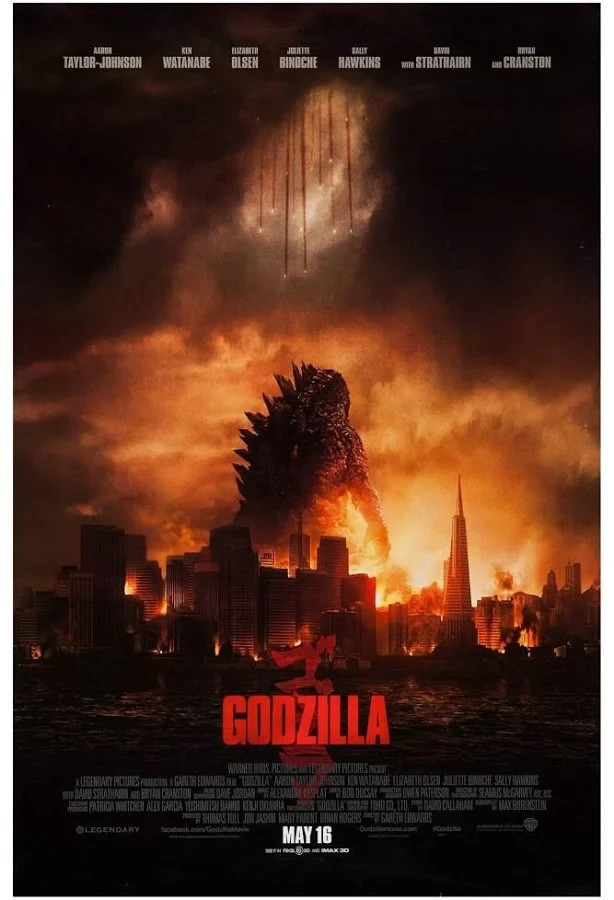
Few film monsters have lasted as long as Godzilla, and fewer still have felt so frightening again after seven decades. With Godzilla Minus Zero, director Takashi Yamazaki continues the story he began in 2023, and audiences have turned out in large numbers to see it.
A Direct Sequel to Minus One
The film follows Godzilla Minus One (2023) and is the 39th entry in the Godzilla franchise, the 34th produced by Toho, and the sixth of the Reiwa era. Toho announced it in November 2024, following the international success of its predecessor.
The title carries on the earlier film's wordplay. The official synopsis says that war reduced Japan to zero and Godzilla pushed it into minus, and that two years later the country is still struggling to recover and reclaim its daily life. Just as people begin to cling to a hard-won peace, a new threat strikes. The tagline puts it more bluntly: there is no third time, and everything ends here.
Cast and Creative Team
Yamazaki is both writer and director. Ryunosuke Kamiki, Minami Hamabe, Yuki Yamada, Kuranosuke Sasaki, Mio Tanaka, Sakura Ando and Hidetaka Yoshioka return, joined by newcomers Jun Kunimura, Masami Nagasawa and Min Tanaka. Kamiki and Hamabe play the Shikishima family at the centre of the story, which IMAX's description sums up as the surviving Shikishima family having to face the kaiju's return.
Reports on the plot also say that a second monster, King Ghidorah, joins the fray. That gives the film a very different rhythm from the single-creature terror of the first instalment.
Built for the Big Screen
Yamazaki worked closely with IMAX on the project. It is billed as the first Japanese-language Filmed For IMAX release. The film contains 75 minutes in IMAX's expanded aspect ratio.
It is also a long film. At 135 minutes, it is the longest Japanese Godzilla film and the second-longest of the whole series. One notable detail is the setting: it is the first mainline Godzilla film to show the monster visiting the United States since Destroy All Monsters in 1968.
Record-Breaking Box Office
The commercial response has been striking. Variety reported a debut of $30.5 million from 3,254 theatres, enough to top the North American chart. Early Sunday estimates had been slightly higher, at $31.6 million. Either way, it is the largest opening for a live-action foreign-language film in North America, beating the $17.8 million that China's Hero made in 2002.
The film did well overseas too. It took $31.4 million from 77 markets, for a global opening of about $62 million. It was produced by Toho and distributed in North America by GKids. Toho Global's president, Koji Ueda, said the debut showed how deeply audiences worldwide connect with Godzilla and with Yamazaki's vision. He also pointed to the studio's first near-simultaneous global release.
What Critics and Audiences Think
Reviews have been broadly positive. Rotten Tomatoes lists a 90 per cent critics' score from 174 reviews and a 96 per cent audience score. Critics have commented on the balance between spectacle and character. One review summarised the film as giving us twice the kaiju while holding onto the humanity of its predecessor. Not every reviewer was fully convinced, however, and one noted that the battle scenes, though loud, are less thrilling than those in Minus One.
Why the Human Story Matters
The first film succeeded partly because Godzilla was a symbol of postwar trauma as well as a monster. Survivors, not soldiers or superheroes, were its focus. Yamazaki has said that he wanted to go back to the original reason for Godzilla's existence. The sequel seems to keep that idea at its heart, even as the scale of the destruction grows.
How to See It
If you can, see it on the largest screen near you. The film was shot and framed with IMAX in mind, and the extended-ratio sequences are intended to fill the screen from floor to ceiling. The film is rated R in the United States. Anyone unsure whether it suits them should check the rating details before booking.
It is not essential to have seen Godzilla Minus One first, but the emotional payoff is far greater if you have. Watching the two films in sequence is the best way to appreciate how the story develops.
A Franchise Still Evolving
Godzilla has just turned 72, and the franchise could easily have become a museum piece. Yamazaki has instead revived one of cinema's longest-running series by taking it back to its Japanese roots. Whether Godzilla Minus Zero proves a one-off triumph or the start of a wider revival, it shows that a monster film can be spectacular, personal and rooted in history all at once, and that audiences will pay to see it.