From Stanford Dropout to Convict: The Story of Elizabeth Holmes
Few Silicon Valley stories have a sharper arc than that of Elizabeth Holmes. She was a teenage dropout who became a billionaire on paper, and she was hailed as a visionary before being convicted of fraud. Her case is still discussed in boardrooms, courtrooms and film studios, and it is back in the news this month as her release timetable shifts and a new documentary draws fresh attention.
A Big Idea and a Young Founder
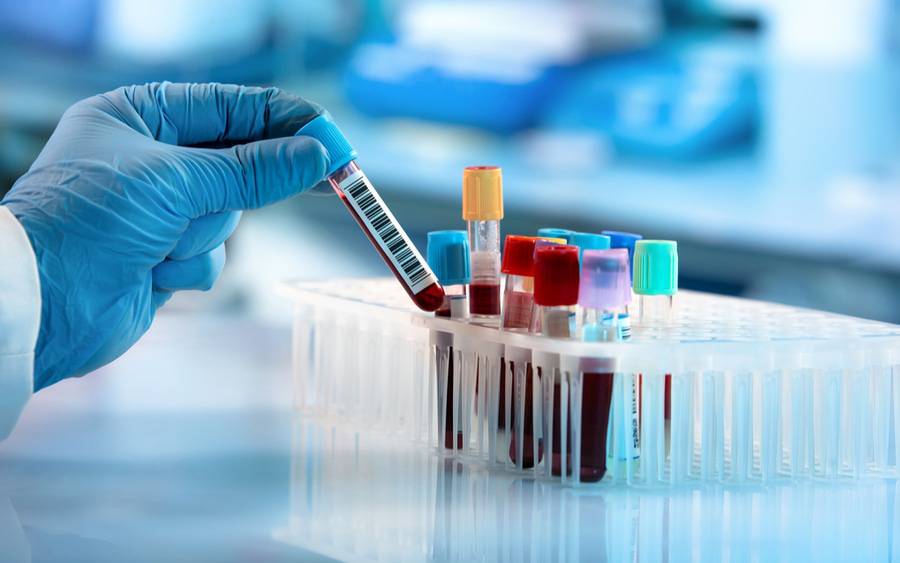
Holmes left Stanford University in 2003 to start a company that would become Theranos. The pitch was simple and appealing. Instead of drawing vials of blood from the arm, patients would need only a few drops from a finger prick, and a compact machine would run a wide range of tests quickly and cheaply.
The promise of cheaper, less painful and more accessible diagnostics attracted serious money. Theranos raised hundreds of millions of dollars and was once valued at around $9 billion. Forbes estimated Holmes's personal fortune at $4.5 billion in 2015. Her black polo necks and her focus on mission-driven healthcare drew comparisons with the great tech founders she admired.
A Board Full of Big Names
Theranos also assembled an unusually prestigious board, including former senior political figures. The names lent the company credibility, but critics later pointed out that the board had little background in laboratory science or medicine. That gap mattered when questions about the technology began to surface.
How the Story Unravelled
The turning point came in 2015, when investigative reporting questioned whether Theranos devices could do what the company claimed. Reporters found that the firm relied heavily on conventional machines made by other manufacturers for many of its tests, rather than its own technology. Regulators scrutinised its laboratory practices, partnerships faded, and the company's value collapsed. Theranos dissolved in 2018.
The affair is often cited as a warning about the risks of secrecy, hype and unchecked confidence in the start-up world. It also exposed how little most investors and partners had tested the central claim.
The Trial and the Verdict
Holmes went on trial in San Jose, California, in 2021. Prosecutors argued that between 2010 and 2015 she misled investors about what the technology could do and how the business was performing. Her defence argued that she believed in the product and that she relied on the scientists around her.
In January 2022 the jury convicted her on four counts: three of wire fraud and one of conspiracy to commit wire fraud, all involving investors. It acquitted her on the counts relating to patients, and it could not reach a verdict on three other investor-related charges. Her former business partner and one-time boyfriend, Ramesh "Sunny" Balwani, was tried separately and convicted on all counts, receiving a sentence of nearly 13 years.
Sentence, Appeals and Restitution
In November 2022 Judge Edward Davila sentenced Holmes to 135 months, or 11 years and three months, followed by three years of supervised release. She was also ordered to pay $452 million in restitution. She reported to the minimum-security Federal Prison Camp in Bryan, Texas, on 30 May 2023, after a failed bid to stay free while she appealed. In 2025 an appeals court upheld her conviction, sentence and restitution order.
Her sentence has since been shortened in several ways:
- Bureau of Prisons credits: Her projected release date has moved earlier more than once as good conduct time and programme credits have been applied.
- A judicial reduction: In March 2026 the judge cut her term from 135 months to 123 months, citing revised federal sentencing guidelines, her lack of prior convictions and a finding that she did not personally cause substantial financial hardship to investor-victims. Prosecutors had opposed any reduction.
- A clemency request: She asked the Justice Department to commute her sentence in 2025, and the request is listed as pending. A commutation would shorten her time in custody but would leave the conviction and restitution in place.
Where Things Stand Now
According to federal records and recent reports, Holmes is approved for transfer to the Austin Transitional Center, a halfway house in Del Valle, Texas, on 23 August 2027. Her projected release date is 22 February 2030, after which she is due to begin three years of supervised release. A move to a halfway house does not end a sentence. It changes how the final stretch is served, usually allowing residents to leave for work or approved activities while observing curfews and checks.
Holmes has said she still believes in her original goal of making testing more accessible, and she has publicly maintained her innocence. Prosecutors have argued that she has not accepted responsibility, a point the court recorded when weighing her sentence reduction. Her partner, Billy Evans, with whom she has two children, is reported to be involved in another blood-testing venture, and the government has raised that in court filings. The documentary You Can See Everything, which follows the family in the weeks before she entered prison, has put her back in the public eye.
Why the Holmes Case Still Matters
The Theranos saga is more than a tale of one person's choices. It shows how a compelling narrative can outrun evidence, particularly in healthcare, where flawed results can affect real decisions. It also shows that courts will treat misleading investors as serious fraud, however ambitious the vision.
For readers, the lessons are practical. Ask for independent verification before backing bold claims, look beyond famous names and polished presentations, and remember that a worthy goal does not excuse deception. The idea behind Theranos, easier and cheaper testing, remains a worthy aim. Holmes's story is a reminder that it has to be proved in the laboratory, not just promised in the boardroom.