Fast and Compact: The Learjet 60, Bombardier's Midsize Workhorse
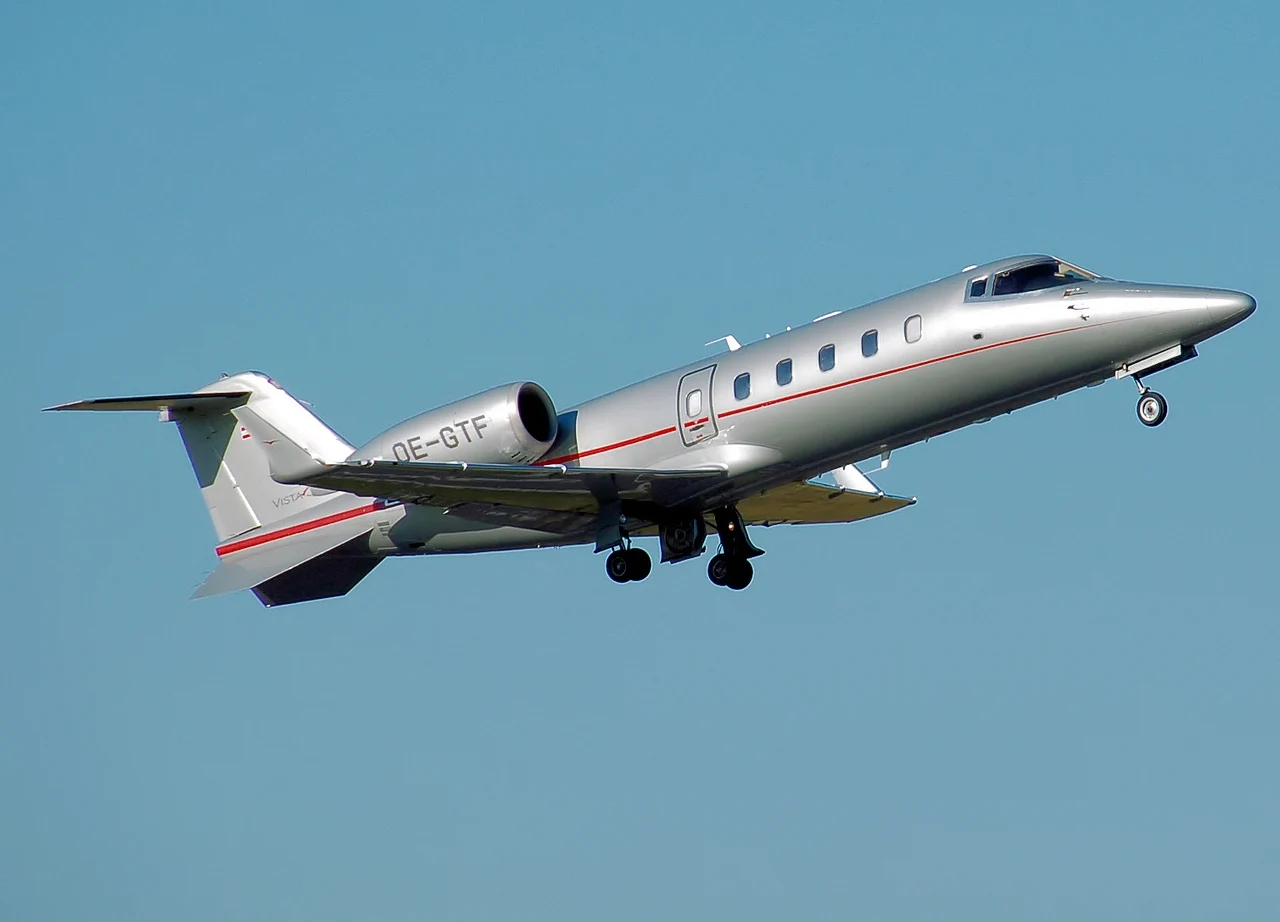
Few aircraft names have become shorthand for a whole category the way Learjet has for the private jet. The Learjet 60 is one of the brand's later and most capable chapters. It is a swept-wing midsize twinjet that took the old Learjet recipe of speed, a high ceiling and a snug cabin, and gave it a bit more room and reach. Production has now ended, but the aircraft is still a familiar sight on ramps worldwide.
From the Learjet 55 to a New Model
The 60 was a development of the Learjet 55 "Longhorn", which in turn drew on the earlier 20 and 30 series. Bombardier of Canada had bought Learjet in 1990, and the 60 was one of the first products of the new ownership. The prototype flew on 10 October 1990, and the US Federal Aviation Administration certified the type on 15 January 1993. Deliveries began that year.
The changes from the 55 were mainly aerodynamic and structural. The fuselage was stretched to increase capacity, and the engines were upgraded so the extra weight would not cost performance. The result suited customers who wanted something larger than a light jet but did not need the budget or hangar space of a heavy one.
What It Is Like to Fly and Ride In
Engines and performance
Power comes from two Pratt & Whitney Canada PW305A turbofans, each rated at about 4,600 pounds of thrust. They are mounted on the rear fuselage, ahead of a T-tail. The type is certified to 51,000 feet, which lets crews climb above much of the weather and commercial traffic. High-speed cruise is around Mach 0.81, and range is generally quoted at somewhere between 2,200 and 2,400 nautical miles, depending on the version, the passenger load and the reserves assumed. That is enough for a non-stop hop across the United States or from London to much of Europe and North Africa.
The cabin
Owners usually praise the 60's speed and climb. The cabin gets more mixed reviews. It is one of the largest in the Learjet family, but its cross-section does not allow standing upright, and it is shorter than that of some rival midsize jets. A typical layout seats seven or eight, with a lavatory and a small baggage area.
| Feature | Learjet 60 (typical figures) |
|---|---|
| Engines | 2 × PW305A turbofans |
| Thrust | About 4,600 lbf each |
| Cruise | Up to about Mach 0.81 |
| Ceiling | 51,000 ft |
| Seats | Up to 8 passengers, plus 2 crew |
| Wingspan | About 43 ft 9 in (13.3 m) |
The 60XR Upgrade
Production of the original model ended in 2007 after 318 aircraft. It was replaced by the Learjet 60XR, which began at serial number 319. The airframe and engines stayed the same. The big changes were a modern Rockwell Collins Pro Line 21 flight deck and a redesigned interior. In July 2012 Bombardier announced a pause in 60XR production, and the line never restarted. That makes the XR the final version of the aircraft.
The End of an Era
In February 2021 Bombardier announced that it would end all Learjet production and concentrate on its Challenger and Global families. The last aircraft, a Learjet 75, was delivered on 28 March 2022, closing about 60 years of manufacturing. More than 3,000 Learjets had been built by then, and more than 2,000 were still flying. The 60 therefore lives on as a pre-owned aircraft. Bombardier and independent maintenance companies continue to support the fleet with parts and servicing. Buyers tend to weigh its speed and range against its age, running costs and compact cabin.
Safety Record and Recent Events
As with any widely used type, the Learjet 60 has been involved in accidents, and each one has been investigated on its own facts. In September 2008 a Learjet 60 overran the runway while taking off from Columbia, South Carolina, and four of the six people on board died. Investigators pointed to a combination of maintenance and pilot error.
On 1 November 2026 another Learjet 60 crashed in Greenacres, Palm Beach County, Florida, after leaving Austin, Texas, bound for the Bahamas. All nine people on board were killed. The United States National Transportation Safety Board is investigating, and reports so far describe thunderstorms in the area and a very rapid descent. No official cause had been announced when this article was written, so it would be wrong to draw conclusions about the aircraft or the crew. The findings will be worth following for anyone with an interest in business aviation.
Why the Learjet 60 Still Matters
The Learjet 60 sits at the point where the old Learjet identity met Bombardier's wider ambitions. It is quick, climbs well and flies high, which suits operators who value time more than cabin space. It also marks the last stage of a family tree that began with Bill Lear's original 1960s design. For readers thinking of charter flights or of buying a used jet, the 60 is a reminder to look at the whole picture: performance, support, maintenance history and crew training count as much as headline speed. Its story is now that of a mature, widely flown type, and it is well documented.